
A Christmas tree can completely change a room in less than an afternoon. The trick is deciding what you want the room to feel like before buying another box of ornaments. Christmas Decoration Ideas can be traditional, elegant, colorful, nostalgic, handmade, or wonderfully mismatched. Current decorating trends are mixing polished ribbon and metallics with handmade pieces, vintage ornaments, natural materials, and playful statement decorations.
Whether you’re decorating a small apartment, a family living room, an office, or an entire home, the best approach is to choose one visual direction and repeat it. That keeps the finished space intentional instead of crowded.
Quick Answer:
The best Christmas Decorations & Trees combine a clear color palette, layered lighting, ornaments in different sizes, greenery, ribbon, and a few personal pieces. For 2026, mix classic elements such as red, green, gold, and warm lights with nostalgic, handmade, natural, or playful accents. A $50–$200 budget can transform one room.
1. Start With a Classic Red-and-Green Christmas Tree
Red and green remain hard to beat because they instantly make a room feel like Christmas. For a 7-foot tree, combine about 60–80 ornaments with warm-white lights, 2–3 yards of ribbon, and a simple star or bow topper.
This style works especially well for family rooms because sentimental ornaments can sit comfortably beside newer decorations. Add a few pinecones or berry picks for texture without buying an entirely new collection.
- Budget: about $60–$120 for new accents
- Best for: traditional family homes
- Setup time: roughly 2 hours
2. Create an Elegant Christmas Tree With Gold and Ivory
An elegant Christmas tree does not need hundreds of expensive ornaments. A controlled palette of ivory, champagne, soft gold, and warm white creates a polished look while still feeling inviting.
For a 7-foot tree, try 60–80 ornaments in three finishes rather than using one finish everywhere. Mix matte balls with reflective ornaments and velvet ribbon so the lights have different surfaces to bounce against. This restrained approach is also consistent with current designer advice favoring cohesive palettes and layered textures.
For more detailed styling, this can naturally lead readers to [elegant Christmas tree ideas].
3. Bring Back a Nostalgic 1990s Christmas Tree
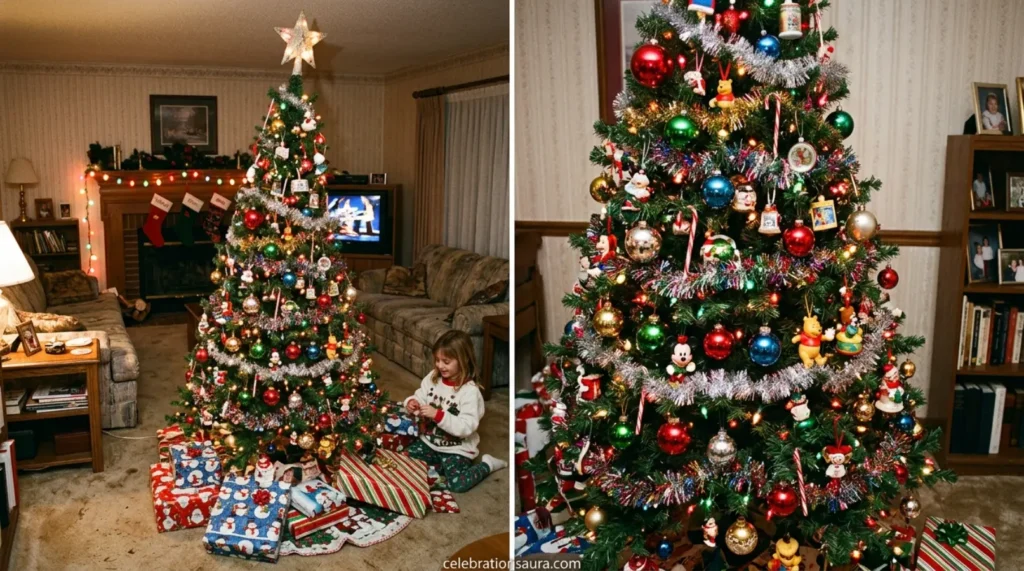
The 1990s Christmas look is having a real moment. Think multicolor lights, shiny tinsel, oversized ornaments, handmade decorations, and the slightly imperfect feeling of a childhood tree.
Instead of purchasing everything new, spend $20–$50 at a thrift store or use decorations your family already owns. Mix old glass ornaments with colorful lights and let children choose 5–10 pieces for the tree.
The appeal is less about perfection and more about memory. Current decorating coverage specifically identifies 90s nostalgia as a growing counterpoint to highly curated holiday styling.
4. Use Oversized Bows and Cascading Ribbon
Ribbon can change the entire appearance of a tree without requiring dozens of new ornaments. Wide velvet, satin, or tartan ribbon creates vertical movement and makes even an inexpensive artificial tree feel more finished.
For a 7-foot tree, start with 10–15 feet of ribbon and tuck it into the branches in loose waves. Add three to five oversized bows at different heights rather than placing every bow around the perimeter.
Bows remain one of the most visible current Christmas-tree trends, particularly when used as a major design element rather than just a topper.
5. Try a Scandinavian-Inspired Tree
A Scandinavian tree favors simplicity over abundance. Use wooden ornaments, straw stars, neutral ribbons, paper decorations, and warm-white lights against green branches.
A 6-foot tree can look complete with roughly 35–50 carefully chosen ornaments. Add a woven basket or natural-fiber tree collar underneath for another layer of texture.
This approach is particularly useful in small homes because the lighter decoration scheme keeps the room visually open. Scandinavian and handmade natural ornament styles continue to appear in major Christmas-tree inspiration roundups.
6. Make the Tree Glow With Warm Lighting
Lighting should go on before ornaments because it establishes the visual foundation of the tree. Warm-white LEDs create a soft glow, while micro or fairy lights can give branches a more delicate appearance.
For a 7-foot tree, begin with roughly 600–800 lights and distribute them from the trunk outward instead of wrapping only the outside. That creates depth when the room lights are turned down.
For a more old-fashioned mood, battery-powered flicker-style LED candles can mimic candlelight without placing an open flame on the tree. Never use real candles on a Christmas tree.
7. Build a Natural Christmas Tree With Dried Oranges and Wood
Natural decorations bring warmth to a green tree without making it feel overly formal. Dried orange slices, pinecones, wooden stars, cinnamon sticks, and small berry stems work particularly well together.
You can make approximately 20 orange slices from 4–5 oranges and dry them slowly before threading them onto twine. Add 15–25 wooden ornaments and a few burlap or linen bows for a rustic finish.
Natural materials and sustainable-looking décor have remained prominent in recent Christmas decorating trends.
The faint citrus scent is an especially nice touch when guests walk past the tree.
8. Create a Moody Burgundy and Forest-Green Tree
Not every Christmas tree needs bright red and white. Deep burgundy, forest green, brown, navy, and antique brass create a richer winter palette that works beautifully in rooms with dark furniture.
Choose two dominant colors and one metallic accent. For a 7-foot tree, 50–70 ornaments are enough if you combine matte, velvet, glass, and metallic finishes.
Current tree-design coverage shows strong interest in dark, moody palettes, particularly when the richer colors are balanced with warm lighting.
9. Add Metallic Gold and Silver for Instant Shine
Gold and silver work particularly well when you want your tree to look festive without committing to a highly themed design. Use gold as the warmer element and silver as the reflective accent.
Try 30 gold ornaments, 20 silver ornaments, and 10–15 neutral pieces on a 7-foot tree. Vary the finishes so the tree does not become one flat metallic surface.
A flocked tree can make this combination look even brighter because the white branches provide contrast. Metallic ornament combinations remain a common recommendation for elegant holiday styling.
10. Give the Tree a DIY Christmas Tree Stand
The bottom of the tree deserves attention too. Instead of leaving a basic metal stand exposed, conceal it with a sturdy basket, planter, wooden box, vintage container, or decorative bucket.
A $15–$40 basket can completely change the finished appearance of a tree. Make sure the container is large enough to hide the stand without interfering with stability or watering if you’re using a real tree.
Current DIY decorating coverage specifically highlights baskets, planters, barrels, boxes, trunks, and other decorative containers as creative ways to disguise tree bases.
For a dedicated tutorial and variations, readers can continue to DIY Christmas tree stand ideas.
11. Make a Pipe Cleaner Christmas Tree Craft With Kids
A pipe cleaner Christmas tree is an inexpensive way to bring handmade décor into your holiday setup. A basic miniature tree can use around 13–16 green pipe cleaners, a small piece of cardboard, beads, and glue.
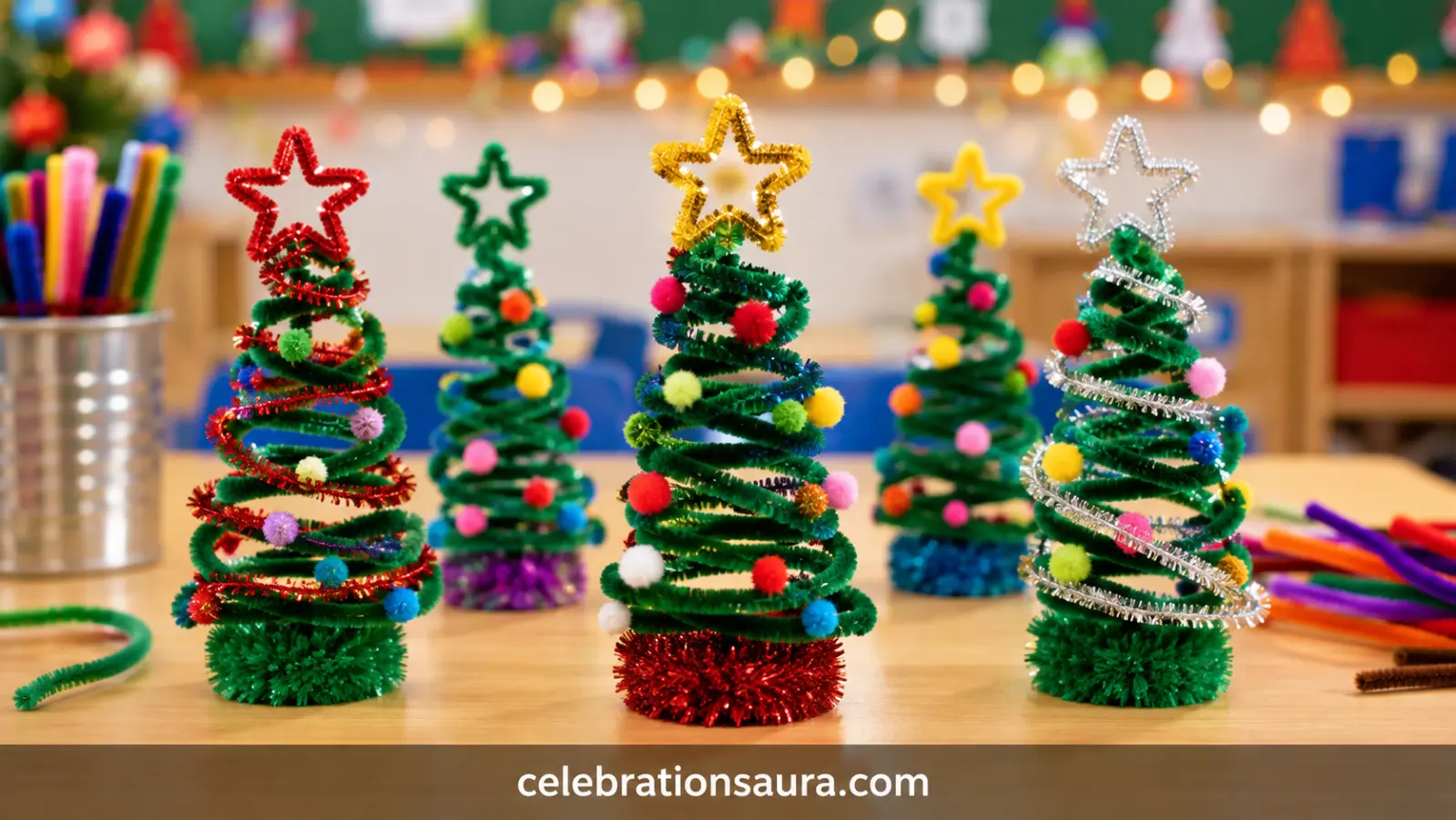
Give each child a 15–20 minute crafting session and let them decorate the finished trees with tiny bells, ribbon, or beads. They can become ornaments, place-card decorations, or miniature trees for bedrooms.
Pipe-cleaner Christmas trees are particularly suitable for younger crafters because the materials are inexpensive and the project develops simple fine-motor skills.
This makes [pipe cleaner Christmas tree craft] a natural companion page for families looking for more variations.
12. Add Playful Snoopy Christmas Decorations
Snoopy decorations bring a nostalgic, family-friendly personality to Christmas without requiring a complicated theme. Use one larger Snoopy figure as the focal point, then support it with 6–12 smaller ornaments or Peanuts-inspired accents.
This works particularly well for children’s rooms, entryways, and family trees where perfection is less important than personality. Keep the rest of the palette simple, red, green, white, and black, so the character pieces remain visually clear.
A dedicated Snoopy corner can also become a fun photo backdrop during family gatherings.
13. Decorate With Mexican Christmas Traditions 🇲🇽
Mexican Christmas décor can add color, craftsmanship, and cultural meaning to a holiday display. Papel picado, nacimientos, poinsettias, luminarias, tin ornaments, star piñatas, and serape textiles are strong examples.
For a living room, combine a 20-foot papel picado banner with a nacimiento on the mantel and two or three poinsettia arrangements. The result feels colorful without requiring every surface to carry decorations.
Your [Mexican Christmas decmexican-christmas-decorationsorations] guide can then provide deeper ideas for traditional pieces, DIY versions, and culturally meaningful styling. CelebrationsAura’s existing guide highlights these elements as core examples of this decorating style.
14. Turn Christmas Cards Into Part of Your Décor
Christmas cards do not have to disappear into a pile on the kitchen counter. Hang them from ribbon, attach them to greenery, arrange them in a tree shape, or display them across a mantel.
A 6-foot ribbon strand can hold roughly 15–20 cards depending on their size. Mini clothespins costing about $6–$10 for a large pack make the setup easy to change as new cards arrive.
Current display ideas also include rolling carts, fireplace garlands, shutters, branches, chalkboards, and wall-mounted card trees.
For more setups, link naturally to Christmas card display ideas.
15. Create a Festive Office Christmas Corner
Office Christmas decorations work best when they create one shared focal point rather than covering every desk. A 4–6 foot pre-lit tree in a lobby or breakroom can cost roughly $40–$90, while desk-sized trees often cost $5–$25.
Add a shared ornament station where employees can contribute one decoration each. A 20-person team can create a surprisingly personal tree without purchasing 20 separate decoration sets.
For larger workplaces, add a decorated doorway, photo corner, or simple garland rather than covering every available wall. Workplace guides also emphasize inclusivity and practical, non-damaging decorating methods.
See [office Christmas decorations] for more workplace-specific ideas.
16. Make a Colorful “Neon Holiday” Tree
If traditional red and green feels predictable, go bright. Pink, electric blue, lime green, silver, and other saturated colors are appearing in current holiday retail and decorating trends.
A 4–5 foot metallic pink tree can become the entire statement piece in a bedroom, office, or apartment corner. Keep the surrounding décor restrained so the colorful tree remains the star.
Recent 2026 retail coverage points to a “Neon Holiday” direction with bright metallic trees and vivid colors as an alternative to conventional green trees.
17. Decorate a Small Apartment With a Slim Tree
Small spaces need scale, not less Christmas spirit. A slim 5–6 foot tree can fit beside a sofa, in a corner, or near an entryway while leaving enough floor space for everyday movement.
Use 30–50 lightweight ornaments, one 6–8 foot strand of ribbon, and warm LEDs. A narrow tree skirt or shallow basket keeps the base visually tidy.
If floor space is extremely limited, choose a tabletop tree around 2–3 feet tall and decorate the surrounding surface with three to five coordinated accents.
18. Build a Christmas Tree in More Than One Room
One tree can create the centerpiece, but small secondary trees spread the holiday mood throughout the house. Try a full-size living-room tree plus 2–3 miniature trees in bedrooms, a home office, or the entryway.
They do not need identical ornaments. Instead, repeat one element, such as red ribbon, warm lights, or wooden stars—so the rooms feel connected.
For a budget approach, spend $10–$25 per tabletop tree and reuse ornaments from your main collection.
19. Match Your Tree to the Room
The best Christmas tree theme usually begins with the room itself. A formal room may suit champagne and gold, a farmhouse room can handle wood and plaid, and a colorful children’s room can support brighter ornaments.
Take a photo of the room before shopping and identify two existing colors you want to repeat. Then buy only decorations that fit that palette.
This approach can save $30–$100 because you are less likely to purchase ornaments that later clash with furniture, curtains, rugs, or wall colors.
20. Create a Christmas Mantel and Tree Pairing
A beautiful tree can look disconnected if the fireplace or mantel uses a completely different color scheme. Repeat two or three tree elements across the room instead.
For example, use burgundy ribbon on the tree, then repeat it in three mantel bows. Add six matching gold ornaments to the mantel and keep the greenery similar to the tree.
The result feels coordinated without looking like every surface came from one boxed set.
21. Know When to Put Up and Take Down Christmas Decorations
There is no single mandatory date for putting up Christmas decorations. Many households decorate around Thanksgiving or during the first week of December, while others start earlier. For a real tree, freshness matters more than a rigid calendar.
For taking them down, January 6 or Twelfth Night is a traditional endpoint, but modern households also remove décor immediately after Christmas or keep winter-themed pieces longer. Fresh greenery and real trees need earlier attention because they dry out.
For a detailed seasonal guide, link to when to take down Christmas decorations.
Which Christmas Decorating Style Is Best for You?
| Your priority | Best choice | Typical budget | Setup time |
|---|---|---|---|
| Classic family Christmas | Red, green and gold | $60–$150 | 1.5–2.5 hours |
| Elegant look | Ivory, champagne and gold | $75–$200 | 2–3 hours |
| Small space | Slim or tabletop tree | $30–$100 | 45–90 minutes |
| Kids’ craft project | Pipe-cleaner trees | $10–$30 | 20–60 minutes |
| Office | Shared tree + desk accents | $50–$200 | 1–2 hours |
| Cultural celebration | Mexican-inspired décor | $40–$150 | 1–3 hours |
| Trend-focused | Neon or novelty tree | $50–$250 | 1–2 hours |
Christmas Tree Safety You Should Not Skip
A beautiful tree still needs to be a safe tree. The National Fire Protection Association recommends keeping a Christmas tree at least 3 feet away from heat sources, keeping a real tree watered daily, using appropriately tested lights, and turning lights off before leaving home or going to bed.
If you have a real tree, check the water level every day and remove the tree when it becomes dry. Never decorate it with lit candles, and do not allow the tree to block an exit. These small habits matter far more than having one extra strand of lights.
Common Christmas Decorating Mistakes to Avoid
The most common mistake is buying decorations before deciding on a color palette. That can leave you with five competing themes and a tree that looks busy instead of intentional.
Another mistake is decorating only the visible outer branches. Place some ornaments closer to the trunk to create depth, then use larger pieces farther out. Finally, avoid putting fragile ornaments within easy reach of toddlers or pets.
Most importantly, do not sacrifice safety for appearance. A perfectly styled tree is not worth keeping if it is dry, unstable, overloaded with damaged lights, or positioned beside a heat source.
How Much Should You Spend on Christmas Decorations?
A $30–$60 budget is enough for a simple refresh if you reuse your existing tree and ornaments. Spend the money on ribbon, lights, a few statement ornaments, and one new accent rather than replacing everything.
A $75–$200 budget gives you much more flexibility. You can add coordinated ornaments, greenery, a tree collar, quality ribbon, and room accents while keeping the same basic tree.
For a $250–$500 splurge, focus on pieces you will genuinely reuse for several years: quality ornaments, durable ribbon, a realistic artificial tree, substantial garlands, or a distinctive topper.
Real or Artificial Christmas Tree: Which Is Better?
A real tree gives you natural fragrance, irregular branches, and the experience of choosing a fresh tree each season. However, it requires daily water checks and should be removed when it dries out.
An artificial tree offers convenience, consistent shape, and easy storage. It is particularly practical if you decorate early, want a specific silhouette, or use the same tree for several themed looks.
Neither choice automatically produces better Christmas Decorations & Trees. The right option depends on whether you value scent and tradition or convenience and repeatability.
How Can You Make Christmas Decorations Look More Expensive?
The fastest way to make holiday décor look expensive is to reduce visual competition. Choose two or three main colors, repeat them across the tree and room, and mix textures instead of buying more pieces.
Velvet ribbon, glass ornaments, matte finishes, natural greenery, warm lighting, and metallic accents can create depth without requiring a huge decoration collection. Current styling advice similarly emphasizes cohesive palettes, layered textures, greenery, and restrained decorating.
Most importantly, leave a little empty space. A tree does not need an ornament on every branch to look finished.
Final talk
Christmas Decorations & Trees become much easier when you stop trying to copy one perfect picture and start with the way you actually use your home. A family room may deserve nostalgic ornaments and colorful lights, while a formal living room might look better with ivory, champagne, and velvet ribbon. A small apartment can shine with a slim tree, and an office can feel festive with one shared focal point.
For 2026, there is plenty of room for personality. Bows, natural materials, nostalgic décor, bright colors, handmade crafts, cultural traditions, and personalized ornaments can all work beautifully when you give them a clear place.
You also do not need to spend hundreds of dollars. Start with what you own, choose two or three colors, add one memorable new element, and build from there. Then make the finished space yours, decorate it, photograph it, and share the Christmas look you created.
Frequently Asked Questions
What is the best time to put up Christmas decorations?
The best time is usually around Thanksgiving or the first week of December, although there is no universal rule. Artificial trees can go up earlier, while real trees need more attention because they gradually dry out.
How many ornaments do I need for a 7-foot Christmas tree?
About 60–80 ornaments usually provide a balanced look on a 7-foot tree. Use several sizes and finishes instead of buying 80 identical ornaments, because variation creates more depth.
How do I make my Christmas tree look elegant?
Use two or three colors, combine matte and reflective finishes, add layered ribbon, and choose warm lighting. A $75–$150 refresh can make an existing tree look considerably more polished.
Should I decorate my Christmas tree with lights or ornaments first?
Always add the lights first. Installing lights before ornaments lets you distribute the glow through the branches and prevents you from knocking ornaments off while reaching into the tree.
When should Christmas decorations come down?
January 6 is a traditional date associated with Twelfth Night, but many families take decorations down between December 26 and early January. Real trees should be removed sooner if they become dry.
Discover More
21 Christmas Party Themes for Every Celebration in 2026
Easy Christmas Treats: 25 Simple Ideas Everyone Will Love

Pingback: Christmas Tree Coloring Pages: 20+ Designs Kids Will Love