
A plain shoebox can become the most talked-about project in a classroom with a little imagination. If you are searching for valentine’s day box ideas, you can turn cardboard, tissue boxes, paper, paint, and a few craft supplies into something memorable without spending a fortune.
From cute animals and candy machines to Harry Potter themes and classic mailboxes, these designs work for different ages, skill levels, and budgets. Most can be finished in 30–90 minutes, making them realistic for a busy weeknight before the school exchange.
Quick Answer:
The best Valentine’s Day boxes combine a sturdy cardboard base with one recognizable theme. A shoebox, cereal box, tissue box, or small shipping box can become a mailbox, animal, rocket, candy machine, or character design. Most projects cost about $5–$20 and take 30–90 minutes to decorate.
1. Classic Valentine Mailbox
A classic mailbox is one of the easiest choices because the shape already matches the purpose. Start with a shoebox or small shipping box, cover it with red or pink paper, and add a 5–6-inch card slot on top.
Add a paper flag, heart stickers, and your child’s name for a finished look. With supplies already at home, this project can cost about $3–$8 and take roughly 45 minutes.
- Use red, pink, or white cardstock.
- Add 8–12 heart stickers.
- Make the flag from cardboard and a craft stick.
A mailbox is especially useful when the classroom exchange involves lots of cards because the opening is easy for classmates to find.
2. Love Monster Valentine Box
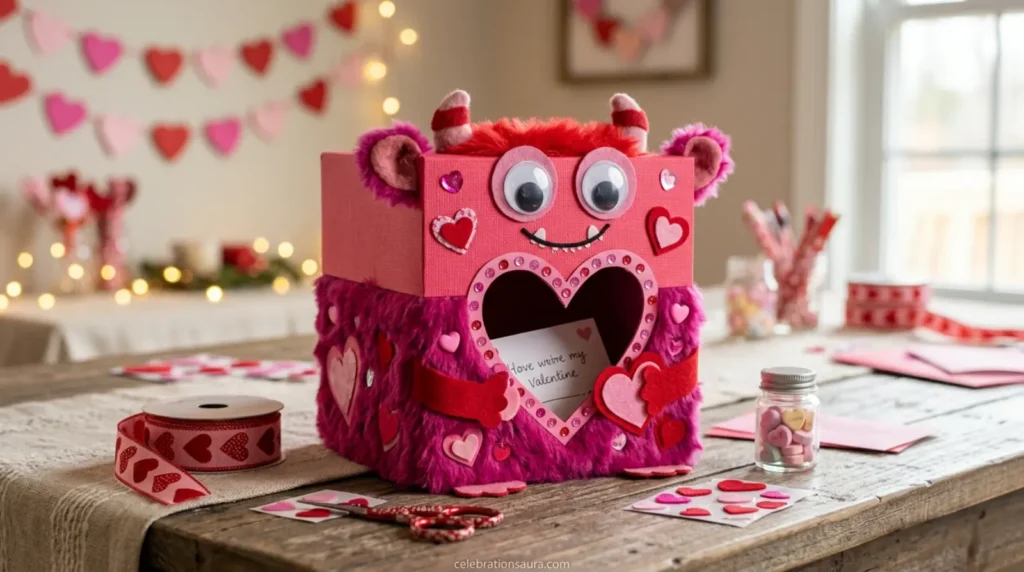
A love monster turns a simple tissue box into something playful. Cover the box with purple, pink, blue, or red paper, then create oversized eyes and a wide mouth around the existing tissue opening.
This design takes about 30–45 minutes and usually costs less than $7. Add 10–15 paper teeth, a fuzzy yarn border, or a heart-shaped tongue to give the monster more personality.
For younger children, let them choose the eye colors and facial expression. That makes the finished box feel like their project instead of a craft made entirely by an adult.
3. Dinosaur Valentine Box
A dinosaur is a strong option for children who want something bold rather than traditionally pink or heart-covered. A cereal box or shoebox gives you enough space for a long dinosaur face and a card opening.
Use green cardstock, cardboard spikes, white paper teeth, and two large eyes. Expect to spend about $8–$15 and 60–90 minutes, depending on how detailed the scales become.
Create the card slot across the dinosaur’s back or inside its mouth. A simple row of 12–15 triangular spikes can make the design recognizable without requiring advanced crafting skills.
4. DIY Valentine’s Day Box Ideas With a Gumball Machine
One of the most playful diy valentine’s day box ideas is a gumball machine. Start with a round oatmeal container or a small cylindrical box for the upper section and a rectangular cardboard base.
Cover the container with clear plastic or decorate it with colorful paper circles that look like gumballs. Add a 4-inch slot near the top for cards. The project generally costs $5–$12 and takes about 60 minutes.
For an easier version, use a rectangular shoebox and paint a large circle on the front instead of building a completely rounded machine.
5. Rainbow Heart Box
A rainbow heart box works well when you want a colorful design that does not depend on a specific character. Cover a shoebox with white paper, then layer six or seven colored paper strips into a rainbow across the front.
Place a large 6–8-inch heart around the card opening to connect the design to Valentine’s Day. Construction paper, glue, and stickers can keep the cost around $4–$8.
This is also a good choice for younger children because cutting simple strips and sticking paper hearts does not require complicated shaping.
6. Valentine’s Day Box Ideas for School: A Mini Locker
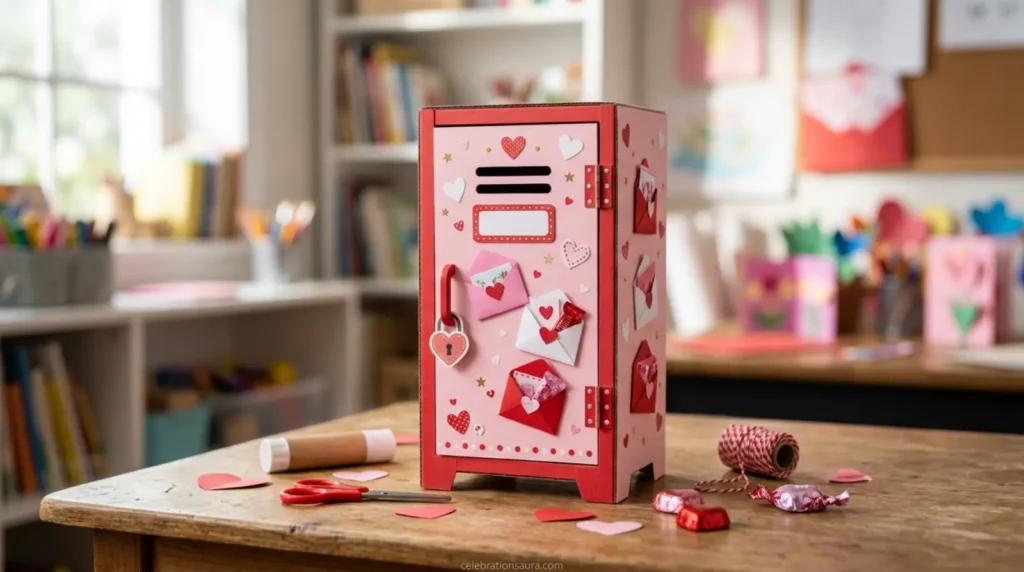
A mini school locker gives a classroom project an unmistakably school-friendly theme. Use a cereal box as the base, cover it with silver or gray paper, and draw a locker handle and vents with a black marker.
Leave a 5-inch opening near the top for Valentine’s cards. The whole project can cost $5–$10 and take around 45–60 minutes.
Add a paper name tag, three heart-shaped “stickers,” and a tiny combination-lock drawing. It is simple enough for elementary students but still looks different from a traditional heart box.
7. Race Car Valentine Box
For children who love vehicles, turn a rectangular shipping box into a race car. Red, blue, black, or bright yellow paper creates the body, while four cardboard circles become wheels.
A 12–16-inch box gives you enough room for cards without making the project too bulky. Plan on $6–$12 for paper, tape, markers, and decorative details.
Put the card slot on the roof so classmates can drop cards inside easily. Add a racing number such as “14” to connect the car to February 14.
8. Unicorn Valentine Box
A unicorn remains a popular choice for children who want a colorful, magical design. A tissue box works especially well because its existing opening can become the unicorn’s mouth.
Cover the box in white or pastel paper, then add a 5-inch horn made from rolled cardstock. Use yarn for a mane and add 8–10 paper flowers around the sides.
This project usually costs $6–$15 and takes about an hour. Keep the horn securely attached and avoid sharp points if the box will be carried by a young child.
9. Harry Potter Valentine’s Day Box Ideas
For a Harry Potter fan, transform a shoebox into a magical Hogwarts-inspired card box. Use burgundy, gold, black, or dark blue paper and decorate the front with stars, books, a wand, or a castle silhouette.
A simple version can cost $8–$15 and take about 60–90 minutes. Instead of copying a complicated character, focus on recognizable wizard-school details that are easier to craft.
You could also make the opening look like a magical envelope slot and add a small paper label such as “Valentine Post.” This keeps the project connected to the card-collecting purpose.
10. Cupcake Shop Box
Turn a cereal box into a miniature cupcake shop with a pink or pastel storefront. Draw a 6–8-inch awning, then add paper cupcakes across the front and a card opening above the counter.
Use construction paper, foam stickers, and markers to keep the cost near $5–$10. The design takes about 45–60 minutes and works particularly well for children who enjoy baking or colorful crafts.
For extra detail, create three-dimensional cupcake tops from tissue paper. Just make sure the decorations stay firmly attached when the box is carried to school.
11. Fun Valentine’s Day Box Ideas With a Camera
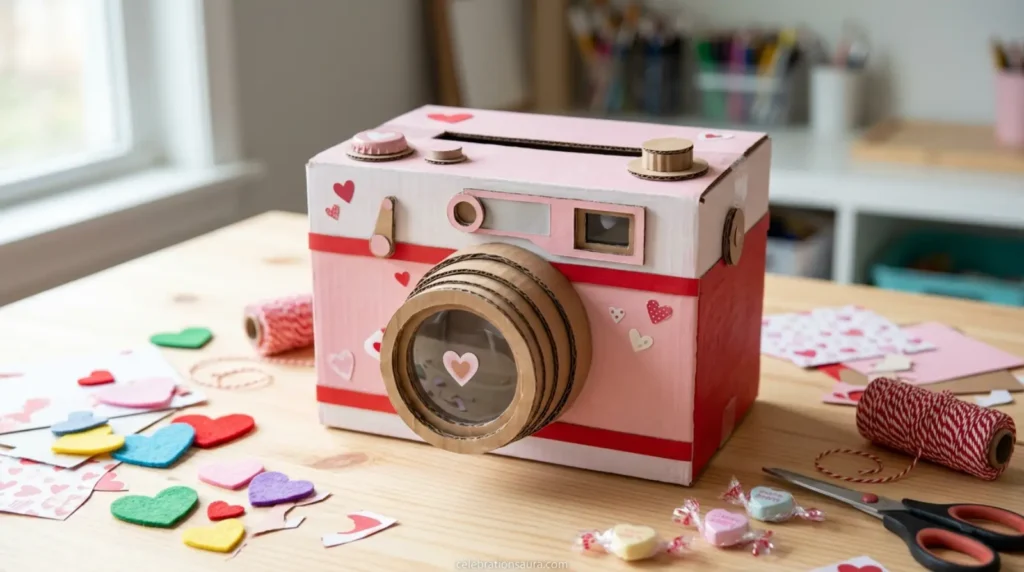
A camera-shaped box gives older elementary students something different from traditional hearts and animals. Wrap a rectangular box in black, silver, or pastel paper and create a large circular lens from cardboard.
Add a 4–5-inch card slot on the top or back. With cardstock, tape, and a few stickers, the project can cost $5–$12 and take about an hour.
Make the lens from two or three circles layered together. A small paper flash and shutter button will make the camera recognizable without adding much extra work.
12. Flamingo Valentine Box
A flamingo box adds a bright pink centerpiece to a classroom desk. Use a shoebox as the body and build the long neck from rolled cardboard or several layers of cardstock.
Pink paper, feathers, and black cardstock can create the main details for around $7–$15. Allow 60–90 minutes because shaping the neck takes more time than a flat decoration.
Keep the neck short and sturdy enough for transportation. If your child has to carry the box across a large school, a compact flamingo design is more practical than an oversized one.
13. Robot Valentine Box
A robot is one of the easiest valentine’s day box ideas for boys, although it can work for any child who likes technology or sci-fi. Start with a tissue box or small shipping box and cover it with silver, gray, or blue paper.
Add two large eyes, a rectangular mouth, and cardboard buttons. The materials can cost $5–$10, and the project can be finished in about 45 minutes.
Use bottle caps, foil, or paper circles for buttons rather than heavy objects. A lightweight robot is easier for children to carry after the classroom exchange.
14. Puppy Valentine Box
A puppy box adds a friendly animal theme without requiring complicated construction. Cover a tissue box with brown, white, black, or tan paper, then attach floppy ears and a large paper nose.
Plan for about $5–$10 and 30–60 minutes. Make the card opening across the puppy’s back or inside its mouth, depending on the box shape.
For a personalized touch, match the colors to your child’s favorite dog breed. Three or four simple facial features can make the box recognizable without covering every inch with decorations.
15. Valentine’s Day Box Ideas for Girls: Butterfly Garden
For valentine’s day box ideas for girl, a butterfly garden can offer a softer alternative to a standard heart-covered box. Cover a shoebox with light-colored paper and add large butterflies made from folded cardstock.
Use five to eight butterflies in different sizes, plus paper flowers and green vines. The materials should cost about $5–$12, with roughly 60 minutes needed for assembly.
Make one large butterfly the centerpiece instead of filling the entire box. This gives the design a cleaner appearance and leaves enough space for the card slot.
16. Rocket Ship Valentine Box
A rocket ship is perfect for children who would rather have a space theme than a traditional Valentine’s design. Use a tall cereal box or shipping box, then add a pointed paper nose and triangular fins.
Silver paper, blue cardstock, and red-orange tissue paper can create the main details for $6–$12. Expect to spend 60–75 minutes on the project.
Put the card opening near the top of the rocket body. Add stars and a small “14” badge to give the design a Valentine’s connection without covering it in hearts.
17. Candy Heart Box
Turn the familiar conversation-heart candy into a large cardboard design. Cover a shoebox in pastel paper and attach 10–15 oversized paper hearts with short messages such as “Be Mine,” “Sweet,” or “Bestie.”
This is one of the simplest fun valentine’s day box ideas because the decorations are mostly flat shapes. Expect to spend $4–$8 and about 40 minutes.
Use large lettering that can be read from several feet away. That small detail makes the box look more intentional when it sits on a classroom table.
18. Sports-Themed Valentine Box
A sports-themed box is a practical choice for kids who do not want a traditional romantic look. Cover the box in the colors of a favorite sport, then add a basketball, soccer ball, baseball, or football design.
The project can cost $5–$12 and take 45–60 minutes. Keep the decorations flat so the box remains easy to carry and does not take up too much desk space.
Add a heart-shaped logo or small paper hearts around the edges. That keeps the sports theme while making the purpose of the box obvious.
19. Under-the-Sea Shark Box
A shark box gives you a dramatic design while still using a basic rectangular box. Cover a shoebox with blue paper, add a gray shark body, and make the mouth the card opening.
Use white cardstock for 12–16 teeth and darker paper for the eyes and fins. The project should cost around $6–$12 and take about 60 minutes.
Make the mouth opening wide enough for cards but not so large that the cardboard becomes weak. Reinforce the edges with tape from inside the box.
20. DIY Love Letter Box
A giant love-letter box is one of the easiest designs for a last-minute project. Wrap a cereal box or shoebox in white paper, draw a large red envelope on the front, and add a heart-shaped seal.
You can finish it for about $3–$7 in 30–45 minutes. Write the child’s name across the envelope and place the card slot at the top.
This option is especially useful when you have only one evening to prepare. It looks intentional without requiring complicated cutting, painting, or construction.
21. Personalized Favorite-Things Box
When a child cannot decide between themes, create a box around three or four favorite things. For example, combine soccer balls, dinosaurs, music notes, and colorful hearts instead of committing to one character.
Keep the base simple and spend $5–$15 on stickers, cardstock, markers, and scrapbook paper. The decorating stage usually takes 45–75 minutes.
This approach also works well for siblings because each child can personalize the same basic shoebox differently. Let the child choose the colors and three main symbols before you start decorating.
Which Valentine’s Day Box Is Best for Your Child?
| Box idea | Approx. cost | Time | Best for |
|---|---|---|---|
| Classic mailbox | $3–$8 | 45 min | Beginners |
| Love monster | $4–$7 | 30–45 min | Younger kids |
| Dinosaur | $8–$15 | 60–90 min | Animal lovers |
| Gumball machine | $5–$12 | 60 min | Creative kids |
| Harry Potter | $8–$15 | 60–90 min | Book/fantasy fans |
| Robot | $5–$10 | 45 min | Easy boys’ theme |
| Butterfly garden | $5–$12 | 60 min | Colorful designs |
| Rocket ship | $6–$12 | 60–75 min | Space fans |
If you need the fastest option, choose the love monster or classic mailbox. For a child who wants something more impressive, the dinosaur, Harry Potter, or gumball machine gives you more room for creative details.
What Supplies Do You Need for a Valentine Box?
Most projects need only 6–8 basic supplies, so you do not need a large craft budget. A shoebox, cereal box, tissue box, or small shipping box can become the base, depending on the shape you want.
Keep these basics nearby:
- Cardboard box or recycled container
- Construction paper or cardstock
- Scissors
- Glue or double-sided tape
- Markers
- Craft foam or stickers
- Ribbon, yarn, or tissue paper
- Optional googly eyes and glitter
For younger children, adults should handle sharp cutting tools and hot glue. Simple paper, glue, and stickers are usually enough for most designs.
How Much Should You Spend on a Valentine Box?
A practical budget is $3–$8 for a simple design, $8–$15 for a detailed design, and up to $20 for a highly decorated character box. You can reduce the cost further by recycling packaging and using craft supplies already at home.
A school project rarely needs expensive materials. In fact, recent DIY examples continue to use ordinary cardboard, paper, paint, ribbon, stickers, and other basic craft supplies.
If your child wants a more elaborate design, set the budget before shopping. That prevents a simple classroom craft from turning into a $30 project.
How Can You Make a Valentine Box the Night Before?
You can make a simple Valentine box in 30–60 minutes by choosing a ready-made box, covering it with paper, adding one large theme, and cutting a card slot. Avoid complicated structures when you are working on the night before the school event.
A tissue box is particularly convenient because it already has an opening. A cereal box or shoebox also works well when you need more capacity.
The biggest time saver is choosing one focal decoration. A large dinosaur face, mailbox flag, rocket nose, or giant heart can make the box look finished without dozens of small decorations.
What Makes a Good School Valentine Box?
A good school Valentine box should be sturdy, easy to carry, large enough for cards, and recognizable from a few feet away. A shoebox, cereal box, tissue box, or small shipping box usually provides a practical starting point.
Leave enough room inside for cards and small treats. A design that looks impressive but has a tiny opening can become frustrating during a busy classroom exchange.
Also check your teacher’s instructions before decorating. Some classrooms may have limits on size, candy, glitter, or materials.
Should You Choose a DIY or Store-Bought Valentine Box?
For most school projects, DIY is the better choice because you can personalize it for about $5–$15 and involve your child in the process. Store-bought options may save time, but they usually offer less personalization.
DIY is best when you have 30–90 minutes and basic craft supplies. A ready-made box is more practical when the deadline is the next morning and you cannot spend an hour cutting cardboard.
If you want a meaningful project rather than a perfect-looking one, let your child make some of the decorating decisions.
Common Valentine Box Mistakes to Avoid
The most common mistake is making the box too complicated to carry. A large structure may look impressive at home but become awkward when your child has to take it onto a school bus or through a crowded hallway.
Another mistake is forgetting the card opening. Leave a slot of roughly 4–6 inches, depending on the box size. Finally, secure lightweight decorations firmly because loose paper, yarn, or foam can come off during transportation.
Avoid using sharp protruding pieces or heavy decorations. A sturdy, lightweight design is much more practical for a classroom exchange.
What Can You Put Inside a Valentine’s Day Box?
For a classroom card box, the main purpose is usually to collect Valentine’s cards, notes, and small treats rather than to serve as a large gift container. Some schools may have specific rules about candy or small gifts, so check the classroom instructions first.
For a personal gift box, you can add 3–6 small items such as chocolates, favorite snacks, a handwritten note, socks, a small puzzle, or a self-care item. A DIY Valentine gift box can also work for a family movie night or Galentine’s celebration.
Keep the contents appropriate for the recipient and avoid filling the box simply for the sake of making it look full.
Final Thoughts
Valentine’s Day box ideas become much more fun when the project feels personal rather than perfect. A recycled cereal box can become a rocket, a tissue box can turn into a love monster, and a simple shoebox can become a magical Harry Potter-inspired design with less than $15 in supplies.
The best project is one your child actually enjoys helping create. Give them control over the colors, theme, and a few decorations, while you handle any difficult cutting or assembly. If you are short on time, choose the mailbox or love-letter design and finish it in under an hour. If you have a whole afternoon, try a dinosaur, gumball machine, or character theme. Pick one idea, gather your supplies, and make the box your child’s own this Valentine’s Day.
FAQs
The easiest Valentine box is a classic mailbox made from a shoebox or cereal box. It can usually be completed in about 30–45 minutes with paper, glue, markers, and a few heart stickers.
You can use a cereal box, tissue box, small shipping box, oatmeal container, or another sturdy cardboard container. The best choice depends on the theme and how many cards the box needs to hold.
A school Valentine box should be large enough to hold several cards but compact enough for a child to carry easily. A box roughly 10–14 inches long is usually a practical starting point.
Choose one recognizable theme and add three to five strong details instead of covering the entire box with decorations. A large dinosaur face, camera lens, rocket nose, or mailbox flag can create a clear focal point.
Good options include robots, dinosaurs, race cars, rockets, sharks, sports themes, and gaming-inspired designs. However, any theme can work for any child if it matches their interests.
Discover More
Baby Girl Christmas Outfit: 15 Best Picks for 2026
Easter Ideas for Kids: 21 Fun & Creative Ways to Celebrate in 2026
Funny Retirement Quotes: 75+ Hilarious Ways to Celebrate Retirement
20+ Graduation Poster Ideas for a Memorable Celebration
