
Easter morning can be exciting for kids, but the fun can disappear quickly after the last hidden egg is found. The good news is that you do not need an expensive party to keep the celebration going. These easter ideas for kids mix crafts, games, food, outdoor play, and quiet activities, so you can build a holiday that fits your family.
Whether you have a toddler, several school-age children, or a group of cousins coming over, you can choose a few ideas and create a memorable Easter without spending your whole weekend preparing.
Quick Answer: What Are the Best Easter Ideas for Kids?
The best Easter ideas for kids combine active play, creativity, treats, and family time. Try an egg hunt, bunny craft, scavenger hunt, cookie-decorating station, Easter basket activity, outdoor game, or sensory play. Choose three to four activities based on your children’s ages, available space, budget, and the time you have.
1. Give the Traditional Egg Hunt a Fresh Twist
A classic Easter egg hunt works because children love searching, collecting, and discovering surprises. Instead of simply scattering eggs across the yard, give each child a different color or add a small challenge to make the hunt feel more personal.
For younger children, hide 6–10 eggs in easy-to-see spots. Older kids can search for 15–20 eggs with clues tucked inside. You can also put stickers, temporary tattoos, small toys, or activity cards inside instead of filling every egg with candy.
This approach works especially well for families with children of different ages because you can adjust the difficulty without changing the whole activity.
Try this setup:
- Toddlers: 6–8 visible eggs
- Ages 5–8: 10–15 eggs with simple clues
- Ages 9–12: 15–20 eggs with riddles
- Setup time: about 20 minutes
2. Turn Easter Morning Into a Scavenger Hunt
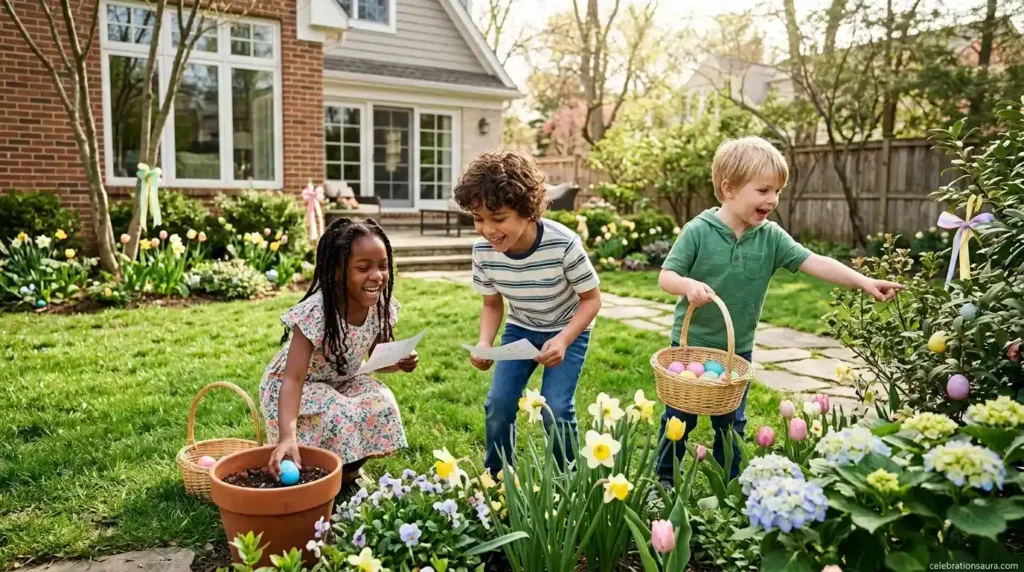
An Easter scavenger hunt adds a little mystery to the holiday. Instead of asking children to find eggs randomly, create a trail of 8–12 clues that leads them around the house or yard.
For preschoolers, use pictures of a couch, tree, basket, or table instead of written clues. For older children, make each clue a short riddle. The final clue can lead to an Easter basket, a special book, or a family breakfast.
You can finish the hunt in 20–30 minutes, making it a good activity before lunch or after breakfast. Current family activity guides also recommend clue-based hunts because they can be adapted to both younger and older children.
3. Set Up an Easter Craft Table
A craft table gives kids something creative to do while adults prepare food or visit with family. Cover one table with craft paper or an old tablecloth, then place the supplies in small containers.
You only need a few basics: cardstock, washable markers, glue sticks, cotton balls, stickers, crayons, and child-safe scissors. For four children, a $10–$15 supply box can provide enough materials for several projects.
Let children choose between bunny faces, paper eggs, chick cards, spring flowers, or their own Easter characters. Do not worry about making every project look perfect. Simple craft stations remain a popular Easter activity because they work for different ages and can use everyday materials.
4. Make DIY Bunny Ears
A homemade bunny-ear headband takes around 15–20 minutes and gives children something they can wear immediately after making it.
Cut two large ear shapes from white cardstock and smaller inner-ear pieces from pink paper. Children can decorate the ears with crayons, stickers, glitter, or pastel markers before an adult attaches them to a paper headband.
For a group of eight children, prepare the ear pieces before the celebration. That small step keeps the table moving and prevents younger children from waiting for an adult to finish cutting.
5. Host an Easter Cookie Decorating Station
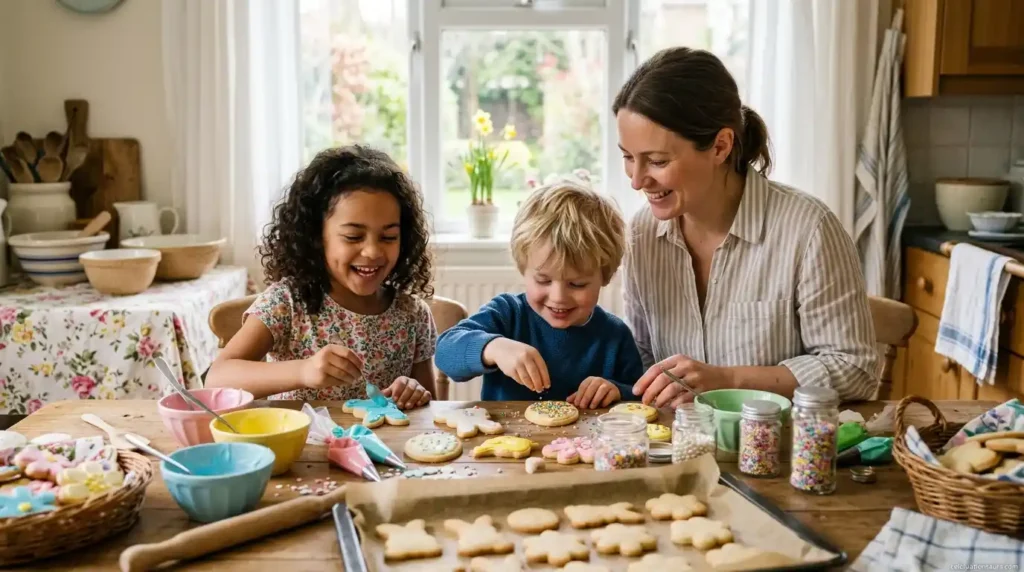
Cookie decorating can become both a craft and a dessert. Prepare 12–24 sugar cookies in bunny, egg, chick, or flower shapes, then place two or three icing colors on the table.
Give each child a small plate and about 3–4 cookies. Add sprinkles, mini chocolate pieces, or edible decorations in separate bowls.
For six children, homemade cookies and basic decorations can cost around $12–$20. The activity usually takes 30–45 minutes, including decorating and eating.
If you want to keep the mess manageable, place parchment paper under each child’s plate and use squeeze bottles for icing.
6. Take Kids on a Spring Nature Hunt
Not every Easter activity needs to involve candy. Take children outside with a simple checklist containing 8–10 things they might see during spring.
Ask them to find a yellow flower, green leaf, bird, butterfly, smooth stone, small stick, or something shaped like an egg. Younger children can use pictures while older children can read the list themselves.
The activity costs nothing and usually takes 20–40 minutes. It also works well before an outdoor Easter picnic.
Nature-based Easter crafts and spring walks continue to appear in current children’s Easter activity collections because they combine holiday fun with outdoor exploration.
7. Let Kids Decorate Their Own Easter Baskets
Instead of giving children finished baskets, let them personalize their own. Start with a plain basket, paper container, or reusable tote and provide ribbons, stickers, paper flowers, and Easter shapes.
A basic decorating session costs about $5–$10 per child if you need to buy the baskets and supplies. Give each child 20–30 minutes to decorate before adding treats or small gifts.
For the basket itself, choose three to five useful or fun items rather than filling it with candy. A children’s book, crayons, bubbles, stickers, or a small outdoor toy can make the basket feel more thoughtful.
8. Hide Puzzle Pieces Inside Plastic Eggs
This is one of the better options when you want Easter fun to continue after the hunt. Choose a 24–48-piece puzzle for younger children or a 100-piece puzzle for older kids.
Place one piece in each plastic egg and hide the eggs around the house or yard. Once children find them all, they work together to complete the picture.
For six children, use a larger puzzle and split the hunt into teams. The activity encourages cooperation instead of turning every moment into a competition.
9. Plan an Indoor Easter Egg Hunt
Rain does not have to ruin your Easter plans. Move the egg hunt inside and hide eggs in safe locations such as beside books, under cushions, inside shoes, or near the breakfast table.
Use 8–10 eggs for toddlers and 15–20 for older children. You can also make the hunt room-by-room, with each completed area revealing the next clue.
Indoor Easter hunts are particularly useful for families without a backyard or when spring weather changes unexpectedly. Current 2026 activity guides specifically highlight indoor hunts as a practical rain-or-shine option.
10. Try an Easter STEM Egg Challenge
Give older children a small problem to solve using plastic eggs, cups, straws, craft sticks, or building blocks.
For example, challenge them to build a holder that keeps an Easter egg from rolling off a table. Give them 20 minutes, then let everyone test their design.
This activity costs around $5–$10 if you need basic craft supplies. It is especially useful for children who enjoy building more than traditional crafts.
11. Create a Bunny Hop Obstacle Course
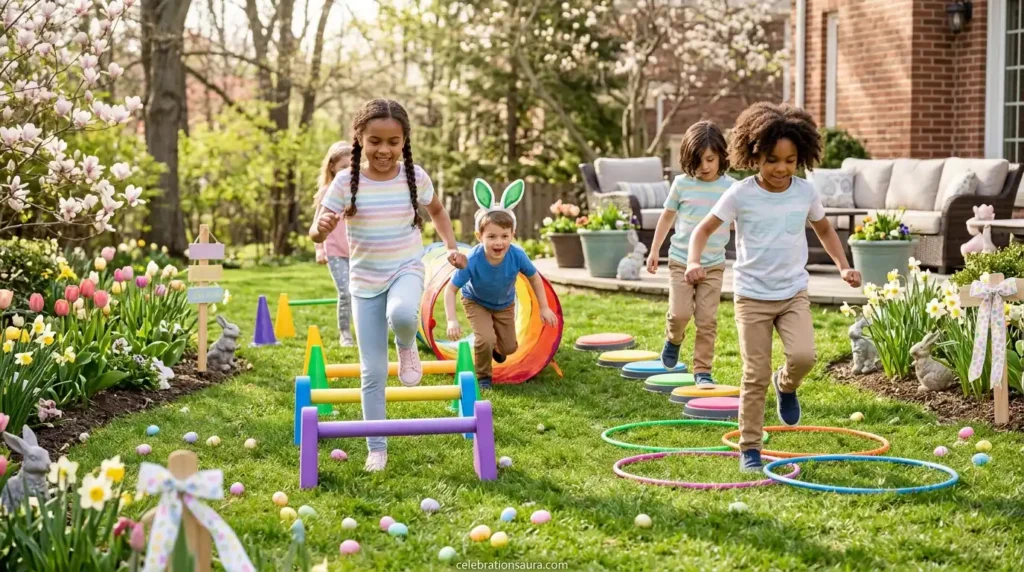
Use pillows, cones, cardboard boxes, hula hoops, or garden objects to create a simple bunny-themed obstacle course.
Set up four or five stations. Children can hop between markers, crawl through a box tunnel, carry a plastic egg on a spoon, and finish by tossing the egg into a basket.
Keep the course around 15–20 feet long for younger children. Older kids can complete two or three rounds and try to beat their previous time.
This is one of the easiest outdoor Easter games when you have a backyard and several energetic children.
12. Play Easter Minute-to-Win-It Games
Quick games work well when you have a group because each round lasts only one minute. Set up three or four challenges using plastic eggs, cotton balls, spoons, cups, and baskets.
One game could involve transferring five plastic eggs with a spoon. Another could challenge children to toss cotton balls into a basket from six feet away.
Keep the prizes simple. Stickers, pencils, small toys, or choosing the next game can be enough to make children excited without creating a major prize budget.
13. Decorate Easter Eggs Without Traditional Dye
Egg decorating does not have to mean bowls of dye covering the kitchen table. Use washable paint, stickers, crayons, washi tape, or food-safe markers instead.
Give each child 4–6 hard-boiled eggs and let them create different designs. Wooden eggs also work well if you want decorations that can be saved from year to year.
For toddlers, washable paint and larger wooden eggs can make the activity easier to manage. For older children, challenge them to create a bunny, chick, flower, or abstract spring design.
14. Make an Easter Sensory Bin for Toddlers
Sensory play can give toddlers a calmer activity between energetic games. Use a shallow container with large plastic eggs, colorful paper grass, large scoops, cups, and age-appropriate Easter toys.
Keep the activity supervised and avoid small pieces that could become choking hazards. Give toddlers 15–20 minutes to scoop, open, close, sort, and move the objects.
For a simple setup, you can spend less than $10 if you already have containers and Easter decorations at home.
Sensory play remains a common recommendation for toddlers because it gives young children opportunities to explore color, texture, movement, and simple problem-solving.
15. Create an Easter Storytime Corner
After several active games, children often need a quieter activity. Create a small reading corner with three to five Easter or spring-themed books, pillows, blankets, and stuffed animals.
Read for 15–20 minutes before lunch or while younger children take a break. Older children can also read to younger siblings or help act out the story.
This works particularly well in a family celebration where children have different energy levels. Some can continue playing while others relax with a book.
16. Make a DIY Easter Photo Booth
A photo booth gives children a fun keepsake without requiring a professional setup. Choose one wall, add pastel paper decorations, and make simple props such as bunny ears, carrot shapes, flowers, and paper bow ties.
You can create the props for less than $10 using cardstock and wooden sticks. Take individual pictures, sibling photos, and one group picture before everyone gets messy from lunch and outdoor games. Let children choose their own props. The funniest pictures are often the ones that happen naturally rather than perfectly posed photographs.
17. Bake Simple Easter Treats Together
Choose a recipe with several small jobs children can handle. Easter nests, cupcakes, decorated cookies, or cereal treats work well because kids can mix, spoon, sprinkle, and decorate.
Give each child one task instead of letting everyone crowd the same bowl. Younger children can add decorations while older kids help measure ingredients with an adult.
Plan 45–60 minutes from preparation to cleanup. The kitchen may get messy, but that is part of the memory.
18. Have an Easter Picnic Outside
If the weather cooperates, take the celebration outdoors. Spread a blanket in the yard or at a local park and pack sandwiches, fruit, cookies, water, and lemonade.
For a family of four, a homemade picnic can cost around $15–$25. Add bubbles, sidewalk chalk, a ball, or a simple scavenger hunt for another 20–30 minutes of entertainment.
A picnic also gives children a natural break between high-energy activities.
19. Make Easter Cards for Family Members
Set out folded cardstock, crayons, stickers, washable markers, and ribbon. Ask children to make one card for a grandparent, sibling, teacher, neighbor, or another person they appreciate.
A 20-minute card-making session can become a meaningful part of the celebration. Younger children can draw pictures while older kids write a short message.
This activity costs very little and gives children a reason to think beyond the treats and games.
20. Add an Easter Kindness Challenge
Create five small kindness tasks for the day. Children might help set the table, share a treat, write a thank-you note, help a younger sibling, or clean up after an activity.
For older children, let them suggest one additional act of kindness. Younger children can complete the tasks with an adult.
This idea takes almost no money and can become one of the most meaningful parts of your Easter celebration.
21. Build a Mini Easter Party With Three Activity Zones
If you are hosting several children, organize the celebration into three simple zones instead of trying to keep everyone doing the same thing.
Create one craft table, one game area, and one snack or quiet zone. Groups of 3–5 children can rotate every 20–25 minutes.
For example, six children could decorate eggs first, complete an egg hunt second, and finish with cookies and storytime. This structure keeps the day moving without making parents organize a new activity every few minutes.
Which Easter Activity Is Best for Your Family?
| Activity | Best Age | Cost | Time | Best Setting |
|---|---|---|---|---|
| Egg hunt | 2–12 | $5–$20 | 20–40 min | Indoor/outdoor |
| Scavenger hunt | 5–12 | $0–$10 | 20–30 min | Indoor/outdoor |
| Craft station | 3–10 | $10–$15 | 30–45 min | Indoor |
| Cookie decorating | 3–12 | $12–$20 | 30–45 min | Indoor |
| Sensory bin | 2–5 | $0–$10 | 15–20 min | Indoor |
| Obstacle course | 4–12 | $0–$10 | 20–30 min | Outdoor |
| STEM challenge | 7–12 | $5–$10 | 20–30 min | Indoor |
| Easter picnic | All ages | $15–$25 | 60–90 min | Outdoor |
Best choices by age
Toddlers ages 2–4: Choose a short egg hunt, sensory bin, egg painting, bunny ears, or storytime. Keep structured activities around 15–20 minutes because younger children can lose interest quickly.
Kids ages 5–8: Add scavenger hunts, cookie decorating, obstacle courses, crafts, and simple challenges. Around 20–40 minutes per activity usually works well.
Kids ages 9–12: Give them more independence with riddles, STEM challenges, puzzle hunts, timed games, and harder scavenger clues.
Current toddler-focused Easter guidance similarly emphasizes short, hands-on activities that children can pause easily rather than long, complicated sessions.
How Do You Plan Easter Activities for Kids on a Budget?
You can create a full Easter afternoon for under $20 by choosing activities that reuse the same supplies. Plastic eggs, paper, crayons, cardboard, homemade snacks, and items already around the house can cover several activities.
For example, spend $6 on plastic eggs, $5 on craft paper and stickers, and use homemade cookies or fruit for snacks. You can then combine an egg hunt, craft station, scavenger hunt, and cookie activity without buying separate kits.
What Are Good Easter Ideas for Kids at Home?
Good at-home options include an indoor egg hunt, bunny craft station, sensory bin, cookie decorating, puzzle hunt, Easter card-making, and storytime.
If you have limited space, choose activities that use one table or one room. A 30-minute craft followed by a 20-minute puzzle hunt can keep children occupied without turning your home into a full party venue.
What Are the Best Easter Activities for Toddlers?
The best toddler activities are short, hands-on, and easy to understand. Try a 6–8 egg hunt, egg painting, bunny ears, sensory play, simple baking, or a spring nature walk.
Avoid complicated clue trails and activities that require children to wait for long periods. Give toddlers one clear task at a time and expect to switch activities after 15–20 minutes.
How Can You Make Easter Fun Without Candy?
Replace some candy with stickers, crayons, bubbles, small toys, books, temporary tattoos, activity cards, or homemade treats.
You do not have to remove sweets completely. A better approach for many families is to mix a few treats with non-food surprises so children have something interesting to discover in every basket or egg.
What Can Kids Do on Easter Besides an Egg Hunt?
Kids can decorate eggs, make crafts, bake treats, play outdoor games, complete a scavenger hunt, create Easter cards, read books, build a sensory bin, or take part in a kindness challenge.
The strongest celebration usually combines different types of activities. Pair one active game with one creative project and one quiet activity instead of scheduling three similar games in a row.
Final Thoughts
Easter ideas for kids become much more memorable when they match the children rather than simply filling the day with more activities. A toddler may remember the excitement of finding six bright eggs in the garden, while a 10-year-old may talk for weeks about solving a difficult scavenger clue.
Start with your space, budget, and children’s ages, then choose three or four activities with different energy levels. Mix a little movement with creativity, food, and quiet family time. You do not need a professionally styled party or a house full of expensive Easter supplies.
A homemade cookie, a decorated egg, a silly bunny-ear photo, or a simple family tradition can become the part children remember most. Pick the ideas that feel natural for your family, add your own twist, and make this Easter a celebration your kids will genuinely enjoy.
5 Frequently Asked Questions
Start with about 8–12 eggs per child for a typical family hunt. Toddlers usually need fewer eggs in easy-to-see places, while older children can handle 15–20 eggs with clues or harder hiding spots.
You can use candy, stickers, temporary tattoos, coins, erasers, small toys, or handwritten activity cards. For younger children, choose age-appropriate items and avoid small objects that could create a choking risk.
Add a theme, color assignments, clues, riddles, or a final treasure. For example, hide 12 eggs and put one clue inside every third egg so children have to solve a short trail before reaching the final prize.
Easy projects include bunny ears, paper eggs, chick cards, egg-carton animals, Easter bookmarks, and decorated paper plates. Most take 15–30 minutes and need inexpensive supplies such as cardstock, glue, markers, and stickers.
Plan three or four different activities instead of relying on one long game. A 30-minute hunt, 30-minute craft, family meal, and 20-minute outdoor game can create a full celebration without overwhelming children.
Discover More
Easter Nail Ideas: 21 Cute and Trendy Designs for 2026
25+ Easter Egg Ideas That Make Easter More Fun
New Year New You: 25 Creative Ideas for a Fresh Start in 2026
